Category Archives: Photography

Summer Projects: keeping the creative juices flowing

by Georgia Lange

Summer is upon us, and many of us are excited about taking a little vacation time. This is particularly true for those of us who have been in school for these past several months. Just because school is out doesn’t mean you should quit working; art is a constant process, and long periods of “time off” can be a waste of creative potential. For a true artist, the work is never finished. There are dozens of ways to keep busy while still having fun. Remember, experience itself can be a work of art (see our previous article on this topic for some more food-for-thought). Here are a couple of ideas to keep your creative juices flowing over the summer.
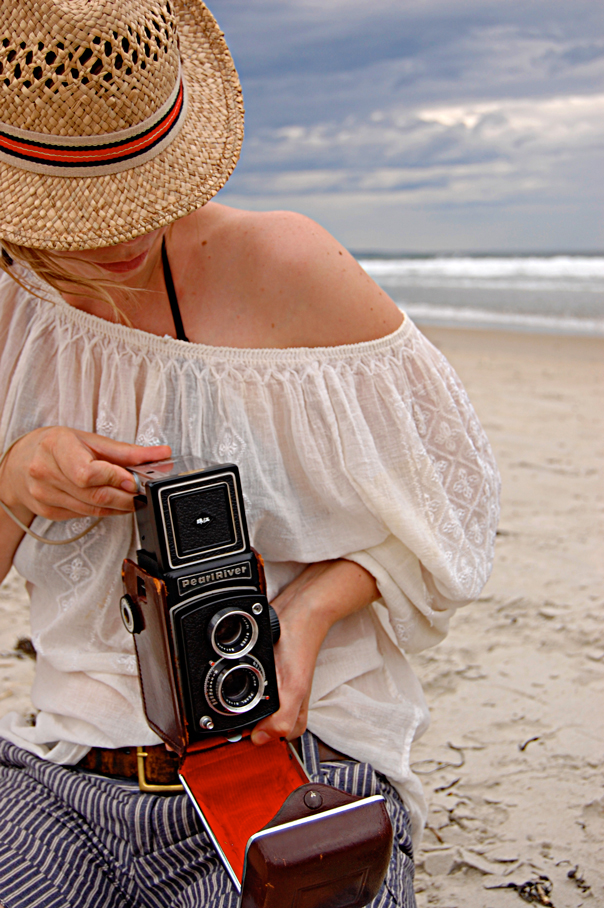
  • Wherever you go, always be armed and ready with a camera and a sketchbook. Better to have it and not need it than to need it and not have it.
  • Getting a second job, an internship, or some volunteer work helps to build experience. Although the job market is still problematic in this economy, volunteer work is always welcome and has a big payoff when it comes to building up the resume.
  • Start a new series, or work on one that you have already started. Galleries love to see a consistent body of work where all the pieces relate to one another (or at least look good together on the same wall).
  • Social networking is crucial these days. It never hurts to get yourself out there and build up your audience. Do this online and in person; use sites like Flickr, Facebook, Etsy, and Twitter and go to as many social gatherings as possible. Remember that the goal is to meet new people.
  • Get feedback from as many people as you can. When you meet someone new, direct them to your website or show them your sketchbook (which you should carry with you at all times). Getting feedback outside of the classroom gives you a better understanding of what market your work falls into, helping you to navigate your career accordingly.

If you would like to comment on this article, or share with us your ideas on how to stay actively creative while enjoyng the freedom of summer, please double click on the title of this article and let us know your thoughts. Let’s get a conversation going!

Easy photo mounting

By David Heyman

One problem that can arise when displaying photographs is the appearance of wrinkles and bubbles in the print over time. This is caused by changes in temperature and humidity affecting the paper, as well as the effects of gravity pulling on different areas of the image to different degrees, causing warping and wrinkles. This can happen whether your photographs are in mats, gallery presentation packages or have been framed.

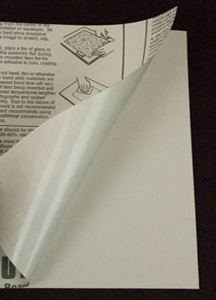
For a smooth, flawless surface, photographic prints need to be mounted to a sturdy board. While dry mounting produces excellent results, it is expensive and requires large, heavy equipment, or time consuming trips to the custom frame store. An easier method, that you can do yourself at home, is to mount the prints on a self adhesive mounting board, such as Crescent Perfect Mount.

Simply place the board on a flat, clean surface, peel off the liner paper, then place your print squarely on the mounting board. If the print is large you need to start from one side, and work your way down the print, making sure there are no air bubbles trapped underneath the paper. Cover the mounted print with the liner paper, and apply firm pressure, from the center towards the sides, to release any trapped air.

Put a weight on top of the package for 24 hours, and then your print is ready for display.

Research Studio: Art as experience / experience as Art

by Georgia Lange

At the School of the Art Institute of Chicago, all students in the first year program are required to take a research studio class. These days, it has developed into multiple research studio classes. As a first year student, I chose the research studio entitled “Art as experience / experience as Art.” I will say now that it was a wise choice, as it turned out to be one of the most interesting classes I ever took.

The idea itself is almost philosophical. Art is an experience in itself. To look at a work of art is to take your mind places where you would never have thought to go, and the journey Continue reading

What is a Protective Closure Sleeve?

By David Heyman

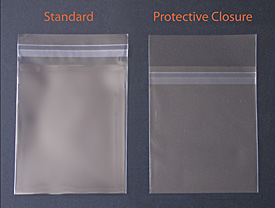
Crystal clear sleeves have an adhesive strip to seal the bags against dust, dirt, bugs and fingerprints, keeping your greeting cards and photographs in pristine condition. This adhesive strip is the key difference in a protective closure style sleeve.

Standard and protective closure sleeves

With standard sleeves, this adhesive layer is on the back of the flap. Simply pull off the cellophane liner, fold the flap over and the bag automatically seals. This works well for most uses, as the sleeve is protecting your contents, while allowing for removal of the item if necessary. Your cards or photos can be changed out, as the sleeves can be re-sealed several times. Continue reading

Featured Artist – Spring 2010: Klaus Lange

SECRETS OF OCEAN LINERS

Impermanent Art — Surprising Beauty

My abstract art photographs are a collection of close-up images  of the worn and rusting paint on ships’ hulls.  With my camera on the high seas I capture fascinating patterns and characters from weathered and repainted ship’s steel. I am a lifelong self-trained artist, and currently give my creativity free reign as a seaman on the San Francisco pilot boat, stationed 12 miles outside the Golden Gate.  While pilots go up and down the Jacob’s ladders in near hourly intervals, I stand camera-ready on deck of the pilot boat, down near the waterline, where the best motifs for my fleeting photography offer themselves so wonderfully. Here for mere moments I find myself presented with surprising Continue reading

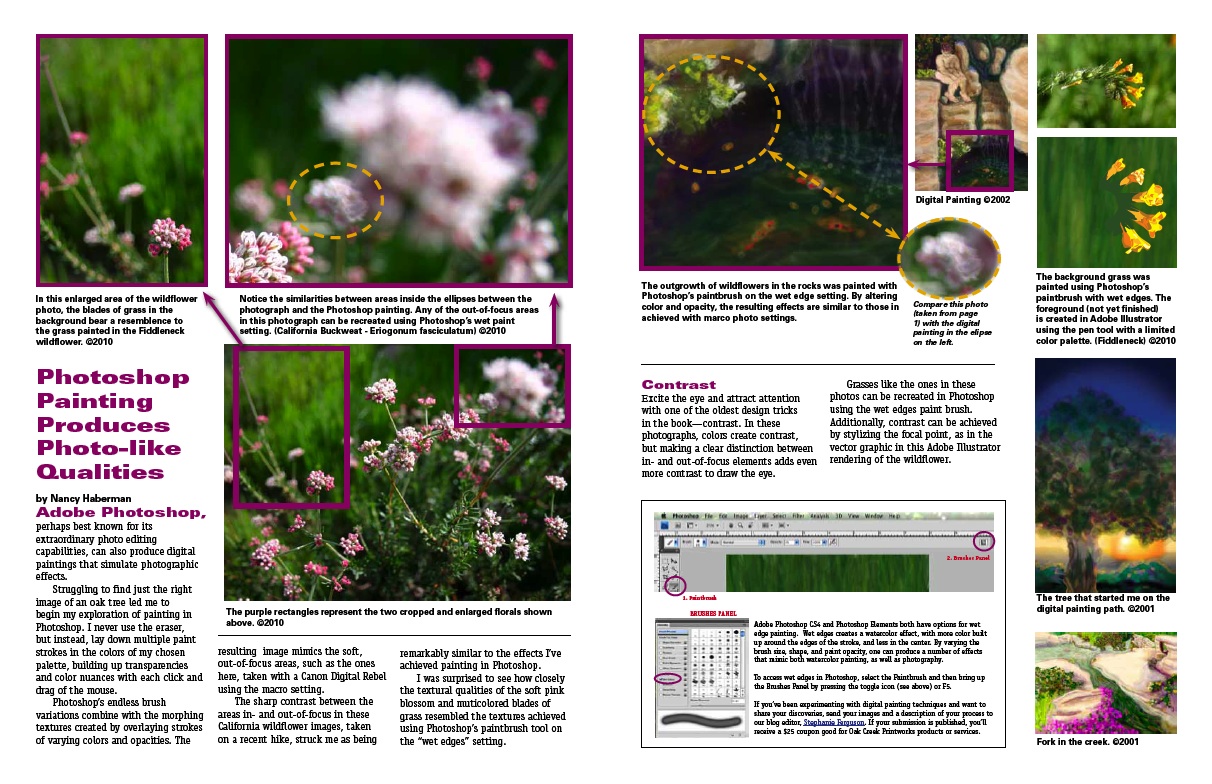
Photoshop Painting Produces Photo-like Qualities

by Nancy Haberman

Adobe Photoshop, perhaps best known for its extraordinary photo editing capabilities, can also produce digital paintings that simulate photographic effects.

Struggling to find just the right image of an oak tree led me to begin my exploration of painting in Photoshop. I never use the eraser, but instead, lay down multiple paint strokes in the colors of my chosen palette, building up transparencies and color nuances with each click and drag of the mouse.

Photoshop’s endless brush variations combine with the morphing textures created by overlaying strokes of varying colors and opacities.  To read the entire article click here for a pdf version: Photoshop Painting

Scanography: Camera-less photography!

by Georgia Lange and Stephanie Ferguson

Are you technologically challenged? Does your busy life leave no time for that photography or painting class you’ve always wanted to take? If you are still yearning for a creative outlet, scanography may be for you. With both fine-art and commercial applications, this is a marvelous tool that just about anyone can use and have fun with. If you have access to a flatbed scanner, you can create beautiful images that Continue reading

Photography Competition: Call for Entries

Communication Arts magazine is having its annual juried photography competition! This is one of the most prestigious competitions in the industry and a great opportunity for all photographers! The deadline for entries is March 26, 2010. For more information, click here. Good luck!

How do I measure my artwork for matting?

By David Heyman

A mat makes any image look more professional. Even without a frame, simply matting your photographs or artwork will do wonders for the presentation, and sales potential, of the work.

Although mats come in many standard sizes, if you are working with custom size images, or anything that is done on a paper that is a creative size, your mat will need to be custom cut. Oak Creek Printworks offers custom cut mats, at a cost relative to a standard size mat, with no extra charges.

How to give the correct measurements for a custom mat is one thing that many artists find confusing. Since custom cut mats are cut to order, it is important to have your borders and window measurements accurate. While you can always call David, our custom picture framer, at (805) 390-4955, with any questions on sizing of borders and windows, the following is a guide that will give you reliable results:

  • Measure the outside edges of your image. Do not assume your image is a certain size. You may have ordered an 8″ x 10″ photograph, but the image actually measures 7-7/8″ x 9-7/8″. If you are matting artwork on paper with an uneven edge, such as a deckle edge, measure the narrowest part of the horizontal and vertical sides, as shown in this photo.

* Add photo of deckle edge watercolor paper, showing w/ ruler how to measure*

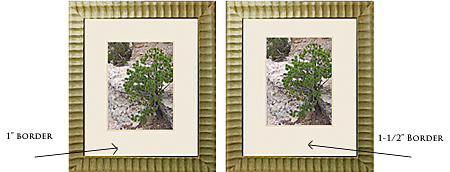
  • Decide if you want even borders for your mat, or a weighted edge. Some people feel that having the bottom border of the mat slightly wider makes the image seem more centered when viewed from a distance. This is called an “optically centered” window.

CenOPCenMats2

  • How wide do you want your mat? A narrow mat allows the image to stand out more and can fit a tight frame. A wide border gives the work dramatic presence and can transform a small image into a large piece. Whichever you decide is up to you, it is just a matter of personal taste. Here are examples of both styles:

NarrowWideMats

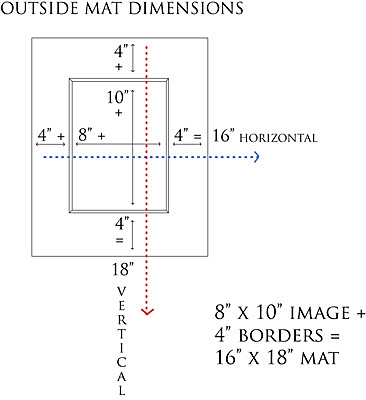
  • When you have this information, perform these two simple calculations, and you are ready to go: To get the outside dimension of the mat, add the horizontal dimension, the width of the mat and the width of the mat again. For example, if your image is 8″ x 10″, and you want a 4″ wide border, add 8 + 4 + 4 = 16″. Do the same with your vertical dimension, in this example – 10″ + 4 + 4 = 18″. So your outer mat dimension is 16″ x 18″.

OuterMat

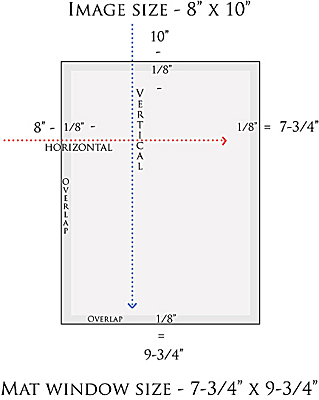
  • The second calculation is your window size. That is simply your image size, minus a slight amount for overlap. Since the window will cover the edges of the image, it needs to be slightly smaller than the artwork. We recommend a 1/4″ overlap, which will allow enough room for overlap and attachment to the back of the mat. In our example, with an 8″ x 10″ image, your window size would then be 7-3/4″ x 9-3/4″.

Print

With practice, this process becomes second nature, and can be quickly transformed into a host of eye-catching sizes for all of your pieces. Taking a little time to measure your own custom mats can save you much time when preparing your shows and matted prints. Which will then give you more time to do what you do best – creating!

The Benefits of Archival Mats

by David Heyman

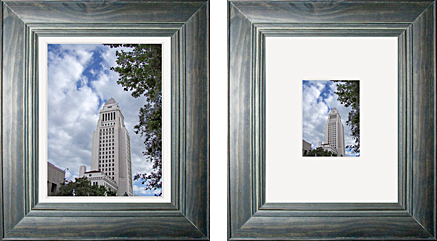
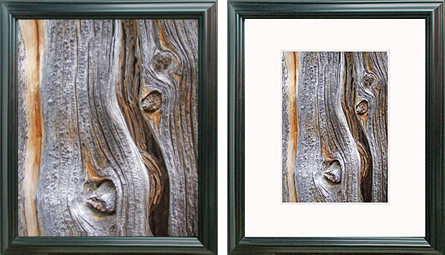
The function of a mat is to give breathing space around your artwork or photograph, letting the eye have a place to “rest” while taking in the image. A blank, neutral mat border surrounding the work adds class and transforms what could be a snapshot into a real work of art. Notice the transformation of this image from a plain poster frame, into a professional, gallery quality display, just by the addition of a mat.

The image on the left looks like a decorative poster, while a mat instantly transforms it into a work of art.

The image on the left looks like a decorative poster, while a mat instantly transforms it into a work of art.

Mats come in many shapes, sizes, colors and textures. However, one crucial element  is often overlooked when selecting a mat: whether or not it is archival in quality.

The majority of mats on the market today are made from wood pulp, the same substance used to make mass-produced paper. While paper products made from wood pulp are inexpensive and abundant, their use in displaying and protecting artwork is limited, due to their rapid decay and discoloration.

Wood fiber contains lignin, an acidic substance that is a cellular component of trees. When that fiber is made into paper, including mats, the lignin remains in the finished product, making it a ticking time bomb for eventual disintergration.

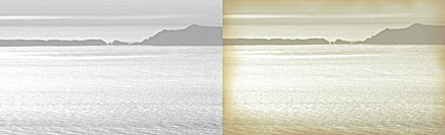
Acid causes mats to yellow, staining your artwork in the process. Gone unchecked, a paper mat will eventually turn brown and become brittle, spreading acid burn on to your work. While substances can be added to the paper fibers to slow down the deterioration, they are temporary, and no mat made with wood pulp is suitable for archival use.  Look at the effects of a wood pulp mat on this photograph:

Notice the yellowing and discoloration on the image matted with an acidic wood pulp mat.

Notice the yellowing and discoloration on the image matted with an acidic wood pulp mat.

The finest mats are made with cotton, a fiber that is naturally free from lignin. 100% cotton mats will never yellow, turn brittle or damage your valuable work. Although initially more expensive than the imported mats made with wood pulp, Oak Creek Printworks Bainbridge Alphamats are a good investment, ensuring that your art is protected and will never be ruined by the careless addition of an acidic mat.

When choosing a mat for your work, never settle for “acid-free”. This is a term thrown about so often it has become almost meaningless. Anything can be labeled acid-free, but that doesn’t mean it will last. An acidic wood pulp mat that is sprayed with an akaline coating is called “acid-free”. Yet the acid in the mat will quickly overcome the coating, and it will have worn off even before the mat is used for diplay.

Here are some criteria to use when selecting a fine quality archival mat:

  • Is it made from wood pulp, “high alpha cellulose”, or 100% cotton?      Nothing is as stable and naturally archival as cotton.
  • Is the mat just “acid-free” or is it truly archival?    An archival mat never needs to be processed or coated to have acid removed, as there is no acid to begin with.
  • Are your mats imported from China, or made in the USA?   Don’t be fooled by offers of “acid-free” imported mats that are too good to be true. Our archival mats, in a bright white, cream, black and gray, are made in the US, and cut right here at our studio.

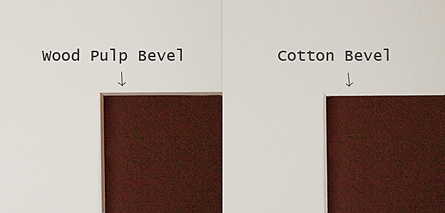
One quick way to check if the mats you have are truly archival  –  look at the bevel (the slanted cut right next to the window of the mat). Wood pulp mats start out with a yellowish core, which quickly turns brown, as shown in these photos. A cotton mat starts out with a bright white core.

On a wood pulp mat, the bevels start out yellow, then quickly turn brown.

On a wood pulp mat, the bevels start out yellow, then quickly turn brown.

Your artwork is your passion. Never compromise or hurt your images with an acidic mat.