Market and network like the pros

If you are serious about being an artist and marketing your artwork, you want to be taken seriously by curators, collectors, and other artists. It is vitally important that you pay attention to what other artists, collectors, and curators are up to. Artists learn by looking; it is simply indispensable in the profession. However, you would be surprised just how many artists there are out there who skip the necessary steps to get their feet through the right doors.

Read the rest of this entry »

Filed under: Artists, Marketing | No Comments

Why Should Artists Blog?

by Nancy Haberman

It seems these days everywhere you look, people are talking about using the internet to earn money. Regardless of whether you’re an entrepreneur running an online store or an artist displaying your work online, your goal should be to drive qualified traffic to your website. A qualified visitor is someone who is genuinely interested in the products or services being promoted, and who is ready to take a specific action (called a conversion), such as making a purchase, filling out and sending in an online form, or calling to schedule an appointment.

Anyone can publish a website, but unless you have a plan of action and know what you want your site to achieve, it will be next to impossible to determine if you are successful. Don’t make the mistake of thinking that once a website is posted, your job is done. That’s like opening a store and forgetting to advertise that you are open. Once a website is online, your marketing has just begun.

Read the rest of this entry »

Filed under: Artists, Marketing | No Comments

15 ways to sell your artwork

There is nothing better as an artist than to see someone display your work and to know that they love and appreciate it. Whether art is a hobby or you earn a living with it, there are always opportunities to sell your art. If you are struggling with how to go about it, the ideas below can be combined to create your own strategy for marketing your work.

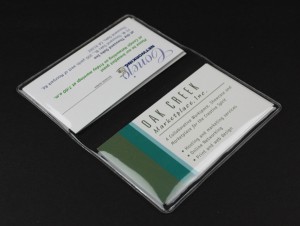
Artist Cards, Editions and Originals (ACEO) – use as business cards to promote your work. Your original art on the front, your contact & product information on the back.

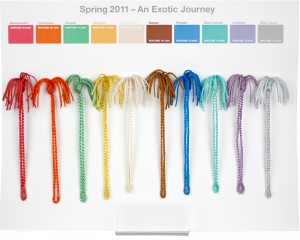
• Bookmarks – again, use as a business card with your art on one side and your information on the other.  Bookmark tassel and sleeve sets can get you started.

• Promotional pieces – T-Shirts, coasters, mugs, etc. – Check out Cafe Press.  Wear your art – “mobile marketing” – then hand out an ACEO or bookmark when someone is interested in your art.

• Mail your art
- Use postcards of your art to advertise your work, sell sets of postcards or give as gifts
- Envelope art – advertise as you send out your mail

• Sell prints. These days it is easy. Fine art printing companies are widely available on the Internet and elsewhere. Many of them do digital capture as well as the printing itself.

• Develop a blog or your own online gallery. At a minimum, get a simple web page where people can view your work and contact you – people expect this.  Get a free hosted blog at Wordpress.com. If you decide you want your own website, check out free web hosting here, then get free blogging software for your website at Wordpress.org.

• Sell on eBAY or ETSY – great places to sell your specialty greeting cards or even original art. List your work on eBay to appeal to consumers who don’t have the time or inclination to pay gallery prices. Set a reserve price that assures you’ll get a decent return on your time.

• Art shows – This can be a great way to get your work seen in the local market. Galleries often host these shows, so they do all the advertising. See our recent blog article for information on shows and how to prepare for them. To find shows in your area you can go to festivalnet.com, or Google “craft show index”.

• Set up a booth at your local farmers market, flea market or swap meet to sell your work. This can be fairly inexpensive.

• Ask to have your art displayed at local libraries, restaurants, Barnes & Noble in the café area, etc.

• Sell through an online artist cooperative.

• Network – join museum or artists’ groups and local business community groups.

• Enter competitions.

• Display or sell your work at church & temple bazaars and holiday boutiques, convention centers and community centers.

• Approach companies that will sell your product. Just because you are an individual, don’t assume that companies won’t want your product. Check out Lady Bones.

How do I measure my artwork for matting?

By David Heyman

A mat makes any image look more professional. Even without a frame, simply matting your photographs or artwork will do wonders for the presentation, and sales potential, of the work.

Although mats come in many standard sizes, if you are working with custom size images, or anything that is done on a paper that is a creative size, your mat will need to be custom cut. Oak Creek Printworks offers custom cut mats, at a cost relative to a standard size mat, with no extra charges.

How to give the correct measurements for a custom mat is one thing that many artists find confusing. Since custom cut mats are cut to order, it is important to have your borders and window measurements accurate. While you can always call David, our custom picture framer, at (805) 390-4955, with any questions on sizing of borders and windows, the following is a guide that will give you reliable results:

  • Measure the outside edges of your image. Do not assume your image is a certain size. You may have ordered an 8″ x 10″ photograph, but the image actually measures 7-7/8″ x 9-7/8″. If you are matting artwork on paper with an uneven edge, such as a deckle edge, measure the narrowest part of the horizontal and vertical sides, as shown in this photo.

* Add photo of deckle edge watercolor paper, showing w/ ruler how to measure*

  • Decide if you want even borders for your mat, or a weighted edge. Some people feel that having the bottom border of the mat slightly wider makes the image seem more centered when viewed from a distance. This is called an “optically centered” window.

CenOPCenMats2

  • How wide do you want your mat? A narrow mat allows the image to stand out more and can fit a tight frame. A wide border gives the work dramatic presence and can transform a small image into a large piece. Whichever you decide is up to you, it is just a matter of personal taste. Here are examples of both styles:

NarrowWideMats

  • When you have this information, perform these two simple calculations, and you are ready to go: To get the outside dimension of the mat, add the horizontal dimension, the width of the mat and the width of the mat again. For example, if your image is 8″ x 10″, and you want a 4″ wide border, add 8 + 4 + 4 = 16″. Do the same with your vertical dimension, in this example – 10″ + 4 + 4 = 18″. So your outer mat dimension is 16″ x 18″.

OuterMat

  • The second calculation is your window size. That is simply your image size, minus a slight amount for overlap. Since the window will cover the edges of the image, it needs to be slightly smaller than the artwork. We recommend a 1/4″ overlap, which will allow enough room for overlap and attachment to the back of the mat. In our example, with an 8″ x 10″ image, your window size would then be 7-3/4″ x 9-3/4″.

Print

With practice, this process becomes second nature, and can be quickly transformed into a host of eye-catching sizes for all of your pieces. Taking a little time to measure your own custom mats can save you much time when preparing your shows and matted prints. Which will then give you more time to do what you do best – creating!

Art Fair Necessities: Learn from the Pros

by Georgia Lange

Last month I paid homage to the prestigious Beverly Hills art show known as the “Affaire in the Gardens”. This art show features over 200 nationwide artists and attracts up to 40,000 spectators every fall and spring since 1973. If you are a fan of outdoor group art shows and fairs, Affaire in the Gardens is top of the line. Even the Andy Gumps are swank at this renowned event.

The Affaire in the Gardens art show is almost too prestigious to be labeled an “art fair”; these individuals are not selling candles and clothing. In researching the exhibition guidelines, I learned that all wearable art and accessories (with the exception of jewelry) is strictly prohibited. Although this particular art show may be out of the traditional art fair league, no one can say that its magnificent display methods cannot be used as a model to other artists for other art shows.

How do these artists prepare for a show such as the Affaire in the Gardens art show; how were the booths set up? How was the necessary equipment acquired? What did each artist offer to promote his or her work? This article is specifically geared towards artists who may want to participate in the Affaire in the Gardens art shows in the future, and how one can prepare for application and participation. However, many of the principles discussed here could be applied to outdoor art shows other than the Beverly Hills art show. It is important to remember that every art show has different guidelines, and it is vital to do the research and examine the requirements before beginning the preparation process. Pay strict attention to deadlines and be at least partially prepared before applying, and remember that what applies to one show may not apply to another.

Click here to see full pdf article

The Art of Giving Art

by Georgia Lange

The holiday season is here, and many of us are struggling to find gifts for our loved ones. The solution to this problem is an easy one; the gift of art is priceless. In the past, I have often found myself hesitant to give my art as a holiday gift to a loved one. I was concerned that I was not valuing my own work, or that I was imposing my own sense of taste on someone else. I have come to the conclusion that this is nonsense. The truth is that people love collecting art, and when the art comes directly from you (it is your creation), it is truly special, unique, and personal. What could possibly be more valuable?

Prints make great gifts for anyone who is special to you. You can dress up your prints by matting them and placing each print in a protective plastic sleeve. Trust me; this is a classy gift and can be very cost-effective. Here at Oak Creek Printworks, we offer a package deal that includes the mat, back, and plastic sleeve. Depending on the size of the print, you can keep your costs under $20 per person (which is not easy to do! I usually can’t find great gifts for less than $30 per person, and even then it is difficult!). Ease your holiday headache; give art! You won’t regret it, and it will be a welcome gift to whoever receives it!

CreamMBBCombo

AN ADDITIONAL NOTE: EARNING THE MONEY TO SPEND ON YOUR GIFTS

Over Thanksgiving, I was surprised not only by the abundance of savory dishes that were prepared by friends and family but by the onslaught of inquiries as to how to purchase prints of my work for the sake of holiday gift giving. Remember: you have friends, and your friends have friends. Those friends give and receive gifts too. Since we tend to establish friendships with like-minded individuals, it is not surprising that our friends’ friends often have tastes similar to our own. Your art not only makes a precious gift for you to give, but for others to give too. This is a great opportunity for you to earn the money to spend on your gifts this season, and then some.

Establishing an online presence where people can view and purchase your work is extremely beneficial. Etsy, a site geared towards all things handmade, is a great way to set up your work for sales. Another great site geared towards artists selling their work online is Big Cartel. Check these sites out as soon as possible, and figure out what will work best for you. Then make the necessary phone calls and emails to your friends and acquaintances and let them know what a wonderful gift your art would make for someone they know, and where they can purchase it easily online.

Be kind this holiday season, and let the season be kind to you.


A little wisdom for the struggling artist

by Georgia Lange

There are many us artists out there who find it difficult to turn our art into thriving businesses. It is enough of a challenge for us to create the art to begin with; when it comes to actually exhibiting and selling our work, a lot of us start to feel stuck with questions as to how this can be accomplished. There are, of course, many exceptional artists who simply have a knack for the business and marketing of their work. Others hire representatives to help them deal with these issues. If you fall under the latter, good for you! If not, and you are feeling a little lost at “marketing” sea, Sylvia White is your lighthouse.

Sylvia White has been offering career advice for artists since 1979 as it relates to exhibitions, business, and marketing. If you have a question regarding the development of your career as an artist, her advice articles will be of great value to you.

Check out Sylvia White’s site for more information.

And thank you, Sylvia, for the wonderful wisdom you are willing to share! We are eternally grateful!

10 Easy tips on displaying your greeting cards

OK, you’ve decided that one way to sell your artwork is on greeting cards. You’ve found some places to sell them – craft fairs, farmer’s markets, local merchants. However, displaying them in booths or on the countertop is different than displaying larger artwork. The most common ways to display cards are in spinner racks, on slat walls, on acrylic shelves, and in free-standing displays. Any display that shows the full faces of cards is ideal. Beyond that, greeting cards aren’t exactly a three-dimensional product, sometimes making them difficult to display creatively.

Here are some easy tips on how to display your cards for sale.

1. No room for a table top display at your farmer’s market booth? Show them off on string or colorful ribbon strung between the posts of your booth or hanging vertically. You can even find mini-clothespins at a craft store to attach them. Keep cards for purchase stored in a box under the table.

2. Make shoe boxes (perhaps wrapped in wrapping paper) with dividers for clients to sort through. Just Something I Made is a wonderful blog on how to build a tiered box system for displaying your cards.

JustSomething

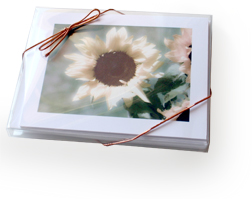
3. Sell sets in clear boxes. Prepare a sheet for the bottom of the box that shows all the card designs included in the box, as shown below:

ClearBox ClearBoxInsert

4. Buy acrylic cardholders for counter-top display. These can be very inexpensive, and are perfect for displaying just one or two card styles on a countertop. Oak Creek Printworks carries small and large stands.

AcrylicEaselSm BackEasel BCEasel

5. Use office divider racks to display your cards. Some office supply stores have what they call “junior” racks, which are smaller than the 8.5 x 11 file size racks (too big for greeting cards).
WireRack

6. Laminate your cards together on a large sheet of paper. If the cards are blank inside you can just show the fronts. If there are verses inside you will want to show both the front of the card and the inside.  These laminated “posters” can be displayed on a table or by hanging on a wall.  Depending on the size, they can also be displayed in an album or flip chart. The art always stays clean, and you can even use dry-erase markers to write on the poster, and wipe it off later. Perfect for listing prices or emphasizing sale items. The actual cards for purchase can be stored in a box or file under the table.

7. Display your art online using a website or a blog, such as Facebook or WordPress.

Facebook – Display your designs and cards on your own facebook page. Link to your blog on WordPress. Join groups of artists who will link to your page and blog, like the Graphic Artists page.

WordPress provides public domain blogging software, which means it is FREE! It is easy to set up an account. Here are some examples of sites that are selling cards with WordPress sites:

Rikki O’Neil and Friendship cards

8. Use a scrapbook or portfolio book to display the cards on a counter top, and store actual cards for purchase in a box or file underneath the counter. The scrapbook can be purchased or even homemade.
scrapbook
9. Arrange a 3-D display on heavy posterboard using the adhesive 3-D dots that scrapbookers use for their album pages. The downside to this method is that if the display board or cards get dirty or dogeared they can be hard to clean.

PopPoster-Cards dotPoster

10. Acrylic Spinners – a perfect countertop or floor display.

Blog-spinners

Don’t forget, when displaying your cards, the best way to protect the artwork as potential customers handle them is to use some type of protective sleeve. Check out our card jackets, no-flap bags, and protective closure bags.

We hope that this information has helped you, and would love to hear how you display your products. Leave a comment, or send us an email at info@oakcreekprintworks.com. Include a photo and we will try to post it here on the blog.

Greeting cards at the Post Office? How can you cash in?

That’s right – at the post office! The financially troubled U.S. Postal Service has a “get well” plan that includes selling Hallmark greeting cards at their local branches. Check out the Washington Post article for full details.

PostOffice

Marketing Your Artwork

So how can greeting card artists cash in on this plan? While you can’t compete with Hallmark at the USPS, check out your local mail franchises, such as Postal Annex, Mail ‘n More, PostNet, etc. Our community also has several postal sub-stations (franchises) at various locations, such as the Sears Catalog Store. Franchise owners are often willing to display greeting cards. You can check on the franchises in your community on franchisegator, franchise-guide, or at postalconnections.

How you display your artwork and cards is very important. While you might not be ready for a large spin-rack, the cost-conscious artist can start out by using our individual acrylic stands. They come in multiple sizes, and are reasonably priced.  Check out our clear acrylic small card/print stand, our large card/print stand, and our print/calendar holder. Each stand will hold multiple cards and envelopes.

Become an Oak Creek Printworks Fan on Facebook

Oak Creek Printworks has joined the Facebook revolution, and invites you to become a fan!

Oak Creek Printworks

Promote Your Page Too